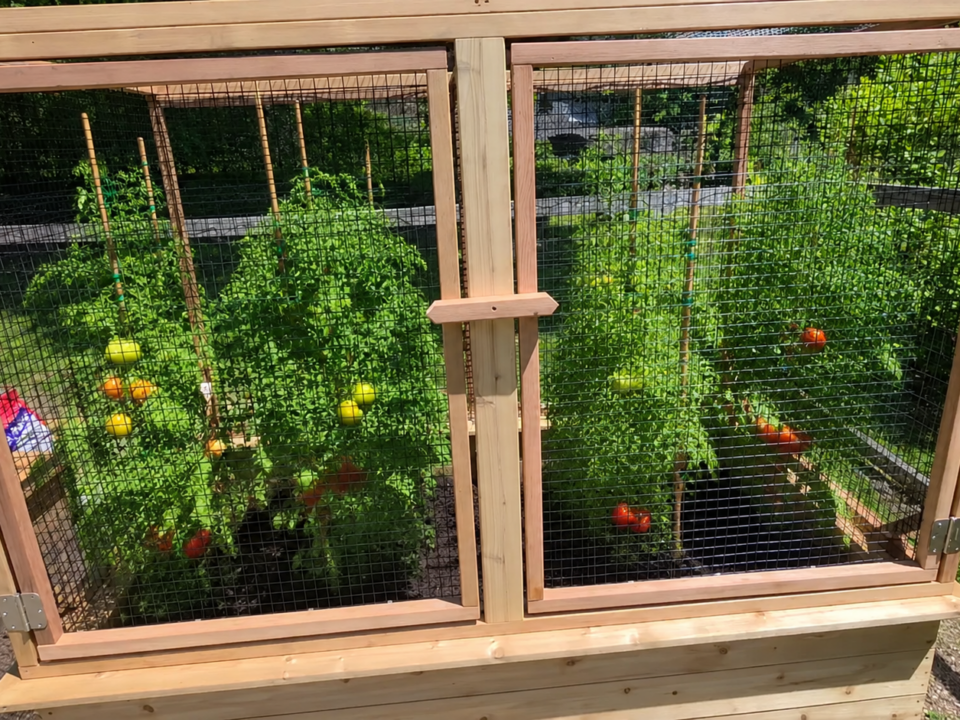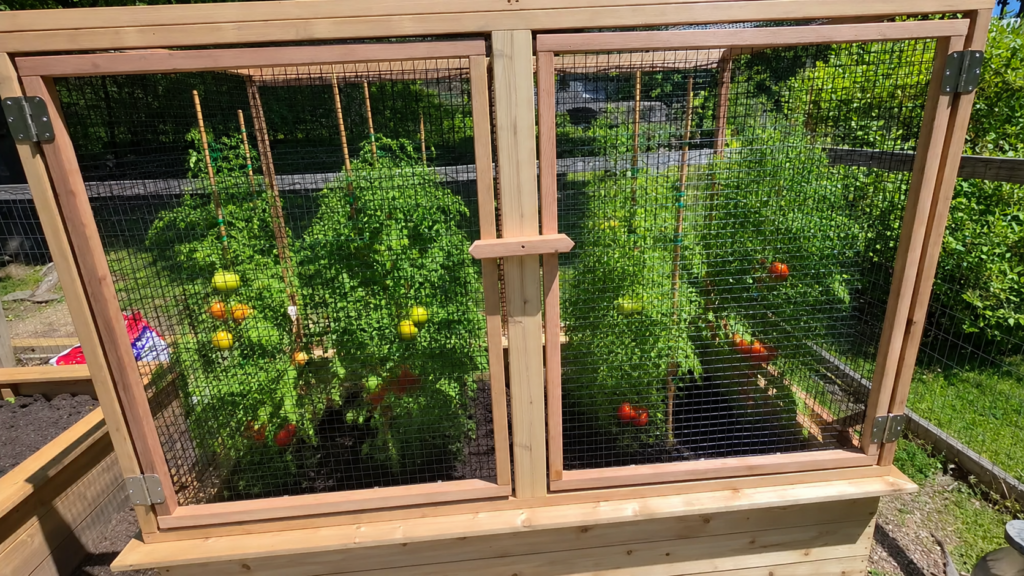
Kitchen Garden of Westchester Service: Custom Cedar Tomato Cage Enclosures
May 13, 2026
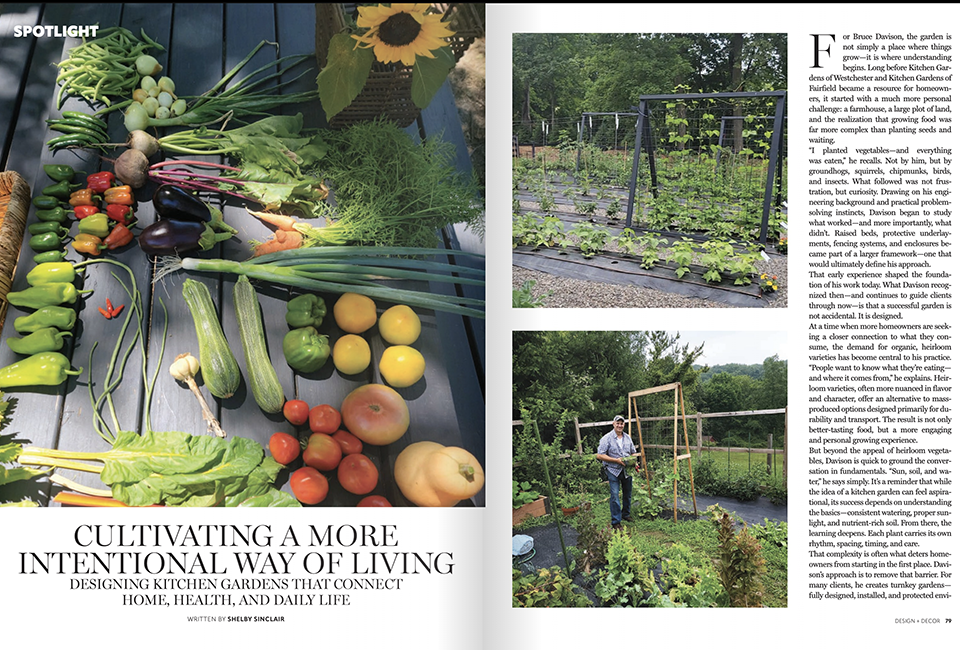
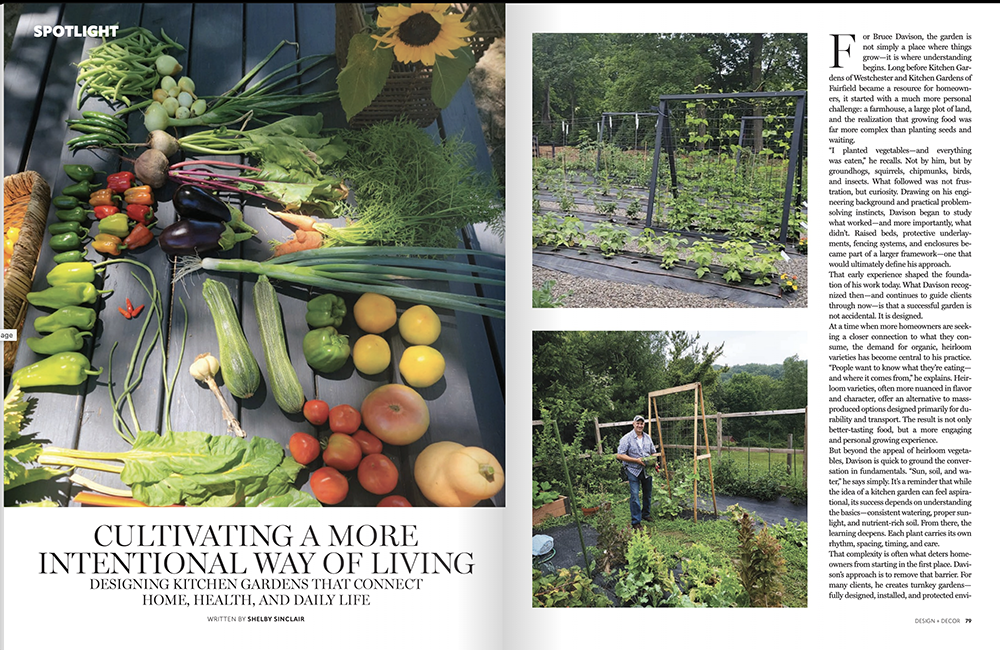
As Seen in The News: Design+ Decor Magazine – May/June 2026
June 22, 2026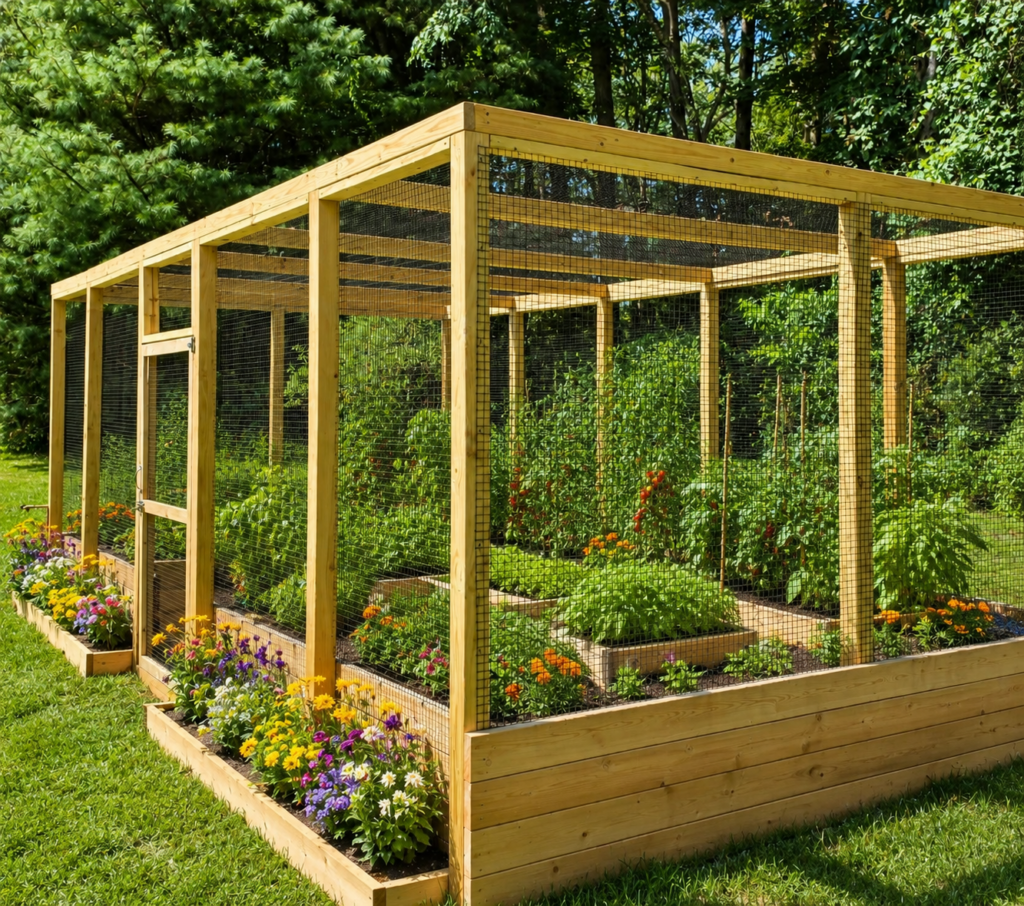
Tomato Planting Tips for Westchester & Connecticut Gardens
Late spring is tomato-planting season in Westchester County and Lower Connecticut — but timing and technique matter.
Tomatoes love warmth. In our region, it is best to wait until the danger of frost has passed and both the air and soil have had a chance to warm. Cornell recommends waiting at least a week or two after the last frost before transplanting tomatoes outdoors, with nighttime temperatures consistently above 45°F. UConn notes that tomato seedlings can be transplanted when soil temperatures reach about 65°F and daytime temperatures average 55°F to 60°F.
In this short video, Bruce Davison of Kitchen Gardens of Westchester shares a few simple but important tomato planting tips that can help your plants grow stronger, healthier, and more productive throughout the season.
Start with Support: Use Tomato Cages Early
One of the first things Bruce points out in the video is the importance of using tomato cages from the beginning.
Tomatoes grow quickly once the weather warms, and putting cages in place early helps support the plant before it becomes too large, heavy, or difficult to manage. Installing cages at planting time also helps avoid disturbing the roots later.
A good cage gives the tomato plant room to grow upward, keeps branches from sprawling across the soil, and makes it easier to prune, water, and harvest.
Plant Tomatoes Deep for Stronger Roots
Tomatoes have a special advantage: their stems can develop additional roots when planted deeper in the soil.
That means a tomato seedling can be planted deeper than many other vegetables, with part of the lower stem buried. This helps the plant establish a stronger root system, which can support healthier growth and better resilience during the hot summer months.
For Westchester and Connecticut gardens, where summer weather can swing from heavy rain to hot dry stretches, strong roots are especially important.
Prune Before Planting
In the video, Bruce also points out that it is helpful to remove some of the lower leaves before planting.
This allows the plant to be set deeper into the soil and encourages the buried portion of the stem to develop roots. It also helps keep low foliage from sitting directly on the soil, which can reduce splash-back during watering and rain.
Cornell Cooperative Extension also recommends mulching around tomato plants to help prevent soil and fungal spores from splashing up onto the leaves, while helping maintain soil moisture and temperature.
Choose the Right Day to Plant
Bruce notes that a cloudy day is ideal for planting tomatoes.
That is a smart tip. Transplanting on a cloudy day, or later in the afternoon, helps reduce plant stress. Young tomato plants can struggle when they are moved into the garden during direct hot sun, especially if they have just come from a greenhouse, nursery, or protected growing environment.
A gentle, overcast day gives the plants a better chance to settle in.
Water Well After Planting
Once the tomato plant is in the bed, water it thoroughly.
A deep initial watering helps settle the soil around the roots and gives the plant the moisture it needs to begin establishing itself. After that, tomatoes do best with consistent watering at the base of the plant rather than frequent light watering over the leaves.
In raised beds, good soil preparation and steady moisture are especially important because raised beds can warm up quickly and may dry out faster during hot weather.
Why Raised Beds Are Ideal for Tomatoes
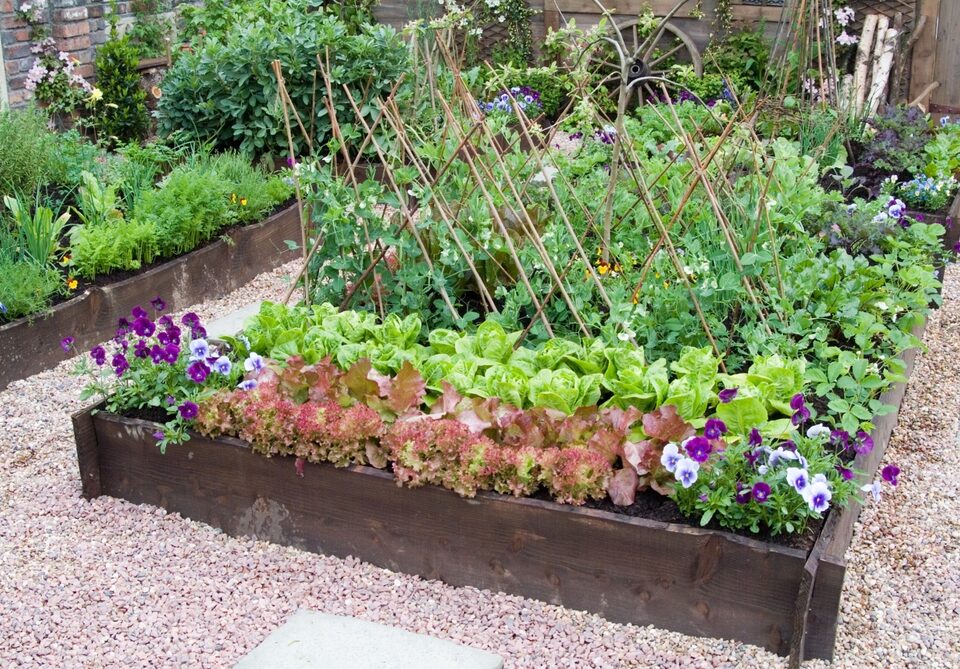
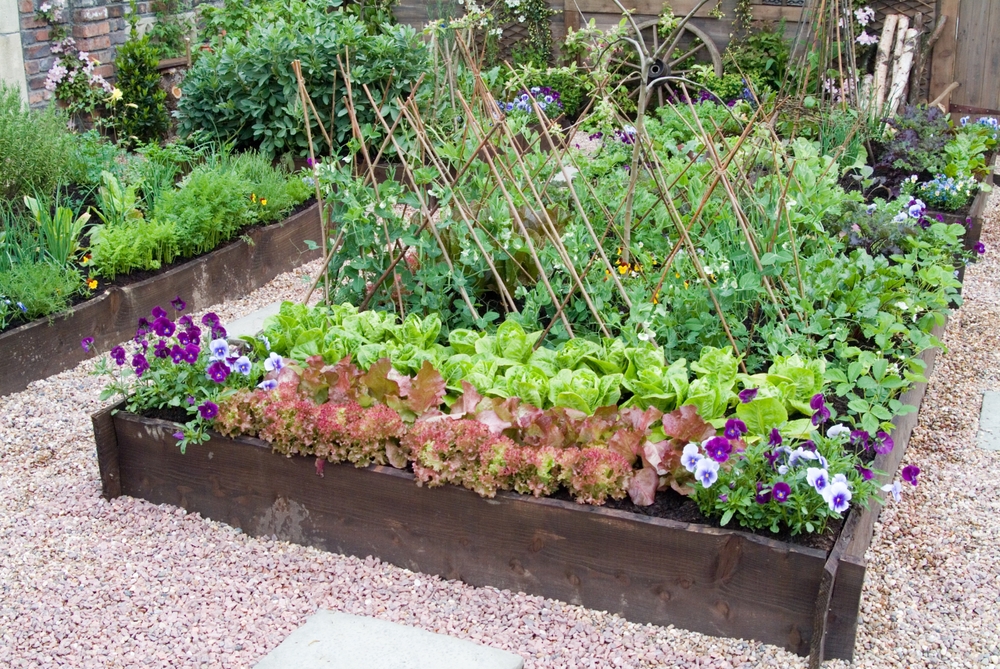
Raised beds are an excellent choice for tomatoes because they offer better control over soil quality, drainage, spacing, and maintenance.
For homeowners in Westchester, Fairfield County, and Lower Connecticut, raised-bed kitchen gardens can also be designed with thoughtful details such as:
- Tomato cages or custom supports
- Irrigation
- Mulch
- Gravel or stone paths
- Deer and rabbit protection
- Enclosures for added pest control
- Companion herbs and flowers
The result is a garden that is not only productive, but also beautiful and easy to enjoy throughout the season.
A Better Tomato Season Starts with Better Planning
A successful tomato harvest begins before the first tomato ripens.
It starts with choosing the right location, preparing healthy soil, planting at the right time, setting up strong supports, and giving each plant enough room, water, and sunlight to thrive.
Whether you are planting a few tomato plants in a raised bed or designing a full kitchen garden with vegetables, herbs, flowers, and protective enclosures, Kitchen Gardens of Westchester can help you create a garden that is beautiful, practical, and productive.
Ready to Grow?
Kitchen Gardens of Westchester designs, builds, and maintains custom raised-bed kitchen gardens throughout Westchester County, Putnam County, Fairfield County, and Lower Connecticut.
If you are ready to grow tomatoes, herbs, vegetables, and flowers with more confidence this season, contact Bruce Davison to start planning your kitchen garden.
Call Bruce Davison at 914.400.3742
Kitchen Gardens of Westchester